What Is Dietary Fibre?
Dietary fibre refers to the indigestible portion of plant-derived foods — primarily consisting of polysaccharides and oligosaccharides that resist enzymatic hydrolysis in the human small intestine. Unlike other carbohydrates, fibre passes largely intact through the upper gastrointestinal tract before being fermented or excreted in the large intestine.
Fibre is classified into two principal types — soluble and insoluble — based on its behaviour in water and its distinct interactions with the digestive system. Many plant foods contain both types in varying proportions, and the majority of documented health associations relate to regular consumption of both.
Soluble Fibre: Properties and Functions
Soluble fibre dissolves in water to form a viscous, gel-like substance within the gastrointestinal tract. This gel formation occurs primarily in the small intestine and influences several physiological processes. The viscous matrix slows gastric emptying — the rate at which food moves from the stomach into the small intestine — and can affect the absorption rate of certain nutrients.
In the large intestine, soluble fibre is fermented by the resident microbial community, producing short-chain fatty acids (SCFAs) such as butyrate, propionate, and acetate. SCFAs serve as a primary energy source for colonocytes (the cells lining the large intestine) and are associated with a range of physiological effects that are the subject of active scientific research.
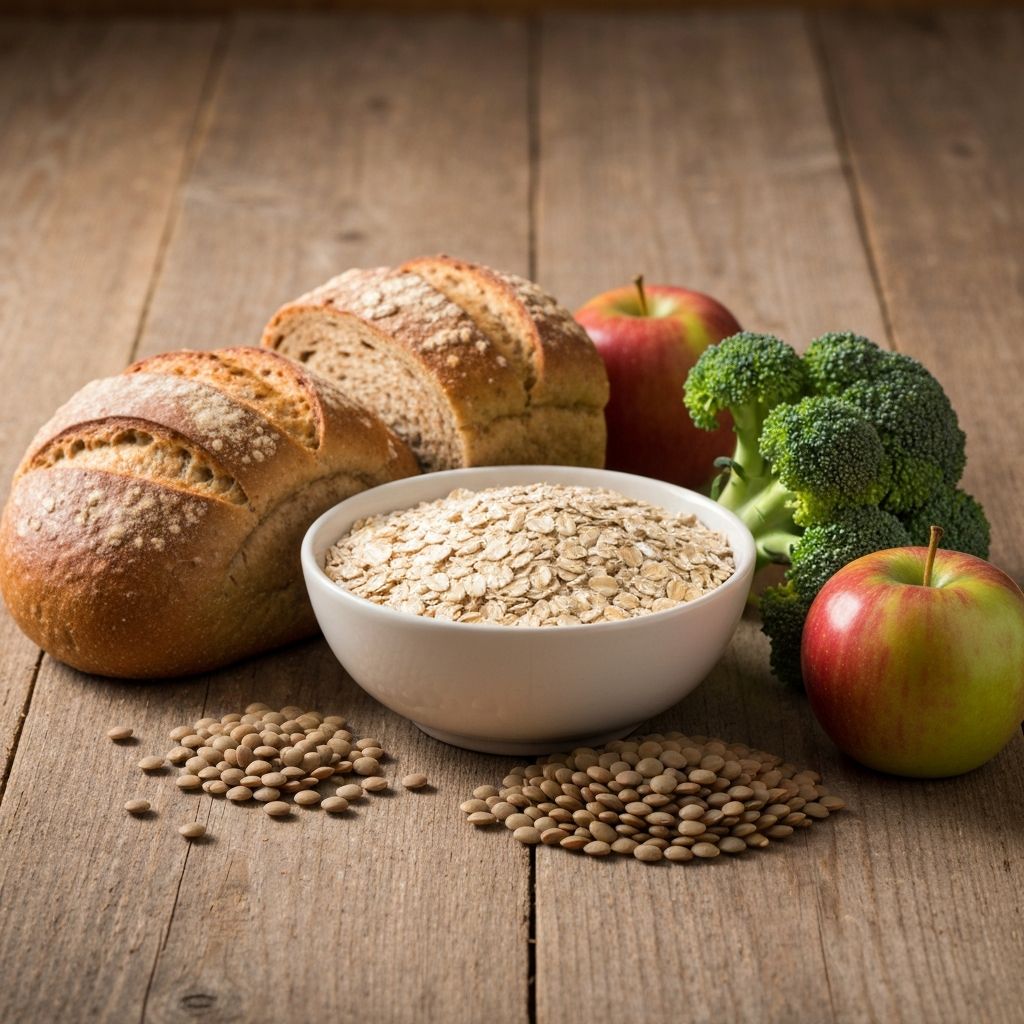
Common dietary sources of soluble fibre include oats and barley (rich in beta-glucan), legumes such as lentils and chickpeas, citrus fruits, apples, and psyllium husk.
Insoluble Fibre: Properties and Functions
Insoluble fibre does not dissolve in water and retains its structural integrity through the digestive process. Its primary mechanical contribution is to increase the bulk and water content of stool in the large intestine, which influences transit time — the rate at which material moves through the colon.
The structural components of insoluble fibre include cellulose, hemicellulose, and lignin. These compounds are found abundantly in whole grain cereals, bran, the skins of many vegetables and fruits, and various nuts and seeds.
While insoluble fibre undergoes less fermentation than soluble fibre, its contribution to stool bulking and consistency is well-documented in the physiological literature.
Most whole plant foods contain a mixture of both soluble and insoluble fibre. The relative proportion of each type varies between plant species and between different parts of the same plant — for instance, the pulp and peel of fruit can differ substantially in fibre composition.
Comparative Overview of Fibre Types
| Property | Soluble Fibre | Insoluble Fibre |
|---|---|---|
| Water behaviour | Dissolves; forms gel | Does not dissolve |
| Primary location of activity | Small and large intestine | Large intestine |
| Fermentation by gut bacteria | Extensively fermented | Minimally fermented |
| Key structural compounds | Beta-glucan, pectin, guar gum | Cellulose, hemicellulose, lignin |
| Typical food sources | Oats, legumes, citrus, apples | Whole grains, bran, vegetable skins |
Fibre and the Gut Microbiome
The fermentation of soluble fibre in the large intestine represents a key interaction between dietary composition and the gut microbiome — the complex community of microorganisms resident in the gastrointestinal tract. Different fibre types support the growth of distinct microbial populations, and the resulting metabolic outputs vary accordingly.
The production of SCFAs through fermentation represents one of the most studied mechanisms by which dietary fibre composition is thought to interact with host physiology. The relationship between fibre intake, microbial diversity, and broader physiological outcomes is an area of active and ongoing scientific inquiry.
Documented Dietary Sources
- Legumes: lentils, chickpeas, kidney beans, split peas
- Whole grains: oats, barley, brown rice, whole wheat
- Vegetables: broccoli, carrots, Brussels sprouts, sweet potato
- Fruits: apples, pears, oranges, berries, bananas
- Nuts and seeds: flaxseed, chia seeds, almonds, walnuts
Information Context and Limitations
This article describes dietary fibre and its classification as documented in nutritional science. It does not constitute dietary advice or individual recommendations regarding fibre consumption. The physiological effects described are drawn from the scientific literature and reflect general patterns rather than guaranteed individual outcomes. Consultation with a qualified healthcare professional is appropriate for any individual dietary inquiry.